
Flow Study: Pranayama: Breath as Regulation by Leslie Aefsky
“Breathing in, I calm body and mind. Breathing out, I smile. Dwelling in the present moment I know this is the only moment.” – Thich Nhat Hanh
“Truly, it is Life (prana) that shines forth in all things! Understanding this, one becomes a knower.” - Mundaka-Upanishad, The Thirteen Principal Upanishads
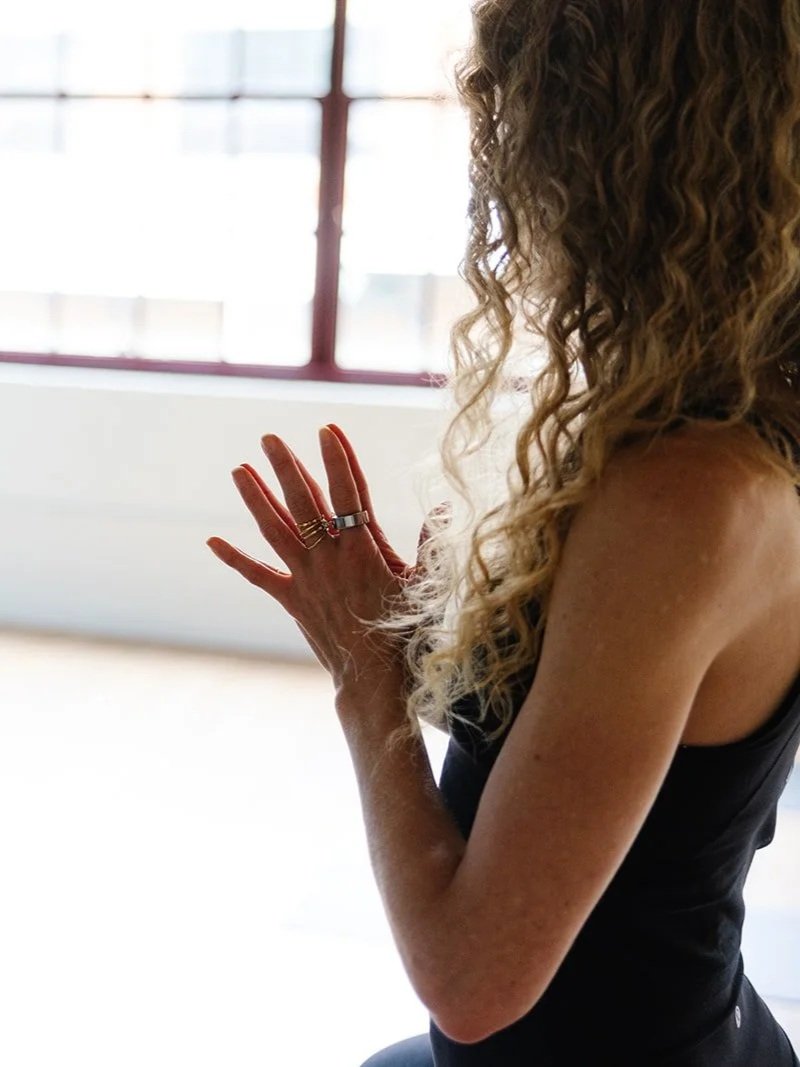
How many of us have been told to “just take a deep breath” when we were upset? This well-intentioned suggestion stems from our general understanding that slow deep breaths can help calm the nervous system and reduce stress, something a growing body of research supports. The ancient yogis understood this too and went much further, recognizing the significant relationship between the breath and mind and their mutual ability to influence each other, helping to shape our overall well-being and vitality.
If you've been following along with our Flow Study series, you know we've been working our way through the Eight Limbs of Yoga as outlined in the Yoga Sutras of Patanjali, which guide us in the essential practices for attaining self-mastery. In previous posts, we explored yoga philosophy,; the first two limbs of yoga, the yamas and the niyamas; and most recently, the third limb, asana. Today, we turn to the fourth limb: pranayama.
What is pranayama?
The Sanskrit term pranayama carries many layers of meaning, encompassing energetic, physical, and spiritual dimensions. This post draws from the translations and interpretations of Richard Freeman, T. K. V. Desikachar, Richard Rosen, and Sri Swami Satchidananda to offer a foundational understanding of pranayama’s meaning and practices.
The Sanskrit word pranayama consists of two parts: prana and ayama. While prana literally means “to breathe forth,” it is commonly defined as “life force” or the underlying energy behind every single vibration in the universe. Other definitions include: breath of life, breath, respiration, vitality, energy, and internal breath. Ayama means “to lengthen and restrain” and describes the action of pranayama.
In the Yoga Sutras, Patanjali describes pranayama as conscious breath regulation practices to help focus attention, reduce mental obscurations, and allow the mind's natural clarity or awareness to emerge in preparation for meditation. Later yogic traditions further describe pranayama as a particularly powerful tool for influencing mental states because the breath is understood to work on a subtler energetic level (i.e. pranic body) that is closely connected to the mind. Richard Freeman provides a comprehensive definition of pranayama as “meditative breathing practices that gradually decondition the breathing habits and patterns associated with a distracted mind…the practices stretch or extend the inhale, the exhale, and the suspensions between them, allowing the sensations and emotions associated with each phase of the breath to become objects of meditation.” Through pranayama practices, we learn to consciously focus attention on the breath, cultivating greater awareness, reducing mental distraction, and bringing about greater balance across the physical, energetic, and mental dimensions of our being.
While a more in-depth discussion of prana types and the energy channels within the body that carry prana (nadis) is beyond the scope of this post, it is helpful to understand that the mind (citta) is thought to move in relation to the internal breath or prana and that blockages of energy can disrupt the internal flow of prana, causing dispersion of prana outside of the body. According to T. K. V. Desikachar, prana is optimally concentrated internally; so the more peaceful and balanced we are, the less our prana is dispersed outside of us. As such, one definition of the word yogi is “one whose prana is all within his body.”
General guidelines for pranayama
Here are a few tips for bringing pranayama into your daily life and into your yoga practice:
Breathe through the nose at all times, if possible, with the mouth closed, tongue relaxed.
Awareness is an essential part of the practice; when the mind becomes distracted, simply notice and direct your awareness back to the breath.
To concentrate on the breath, focus on the flow of breath, the sound of the breath, or the place where we can feel the breath.
Pranayama is best developed slowly and systematically.
Respiration should be controlled and without any strain.
If breathing becomes rough or labored, or if dizziness or anxiety sets in, stop and return to natural breathing.
Pranayama practices can be done sitting or in various supported asanas.
The breath starts before any actual movement into or out of asana.
Breathe diaphragmatically, rather than in your chest.
Two pranayama techniques
The Three-Part Breath
Most of us use only a fraction of our lung capacity without realizing it. The three-part breath is a simple yet powerful practice for learning to breathe more fully and consciously. Here’s how to do it:
Begin with one big exhale.
Then, inhale for 3 counts in three stages: (1) breath into the low belly, (2) then into the side ribs, and (3) finally lifting through the upper chest toward the collarbones.
Pause gently at the top for 3 counts.
Exhale in reverse for 3 counts (i.e. softening the chest, drawing the ribs inward, and finally releasing the belly back toward the spine).
Repeat four more times, bringing gentle attention and visualization to each part of the body as you breathe.
Finally, allow yourself to focus your attention on your natural breath for one minute to re-stabilize and bring ease to the nervous system.
Ujjayi Pranayama
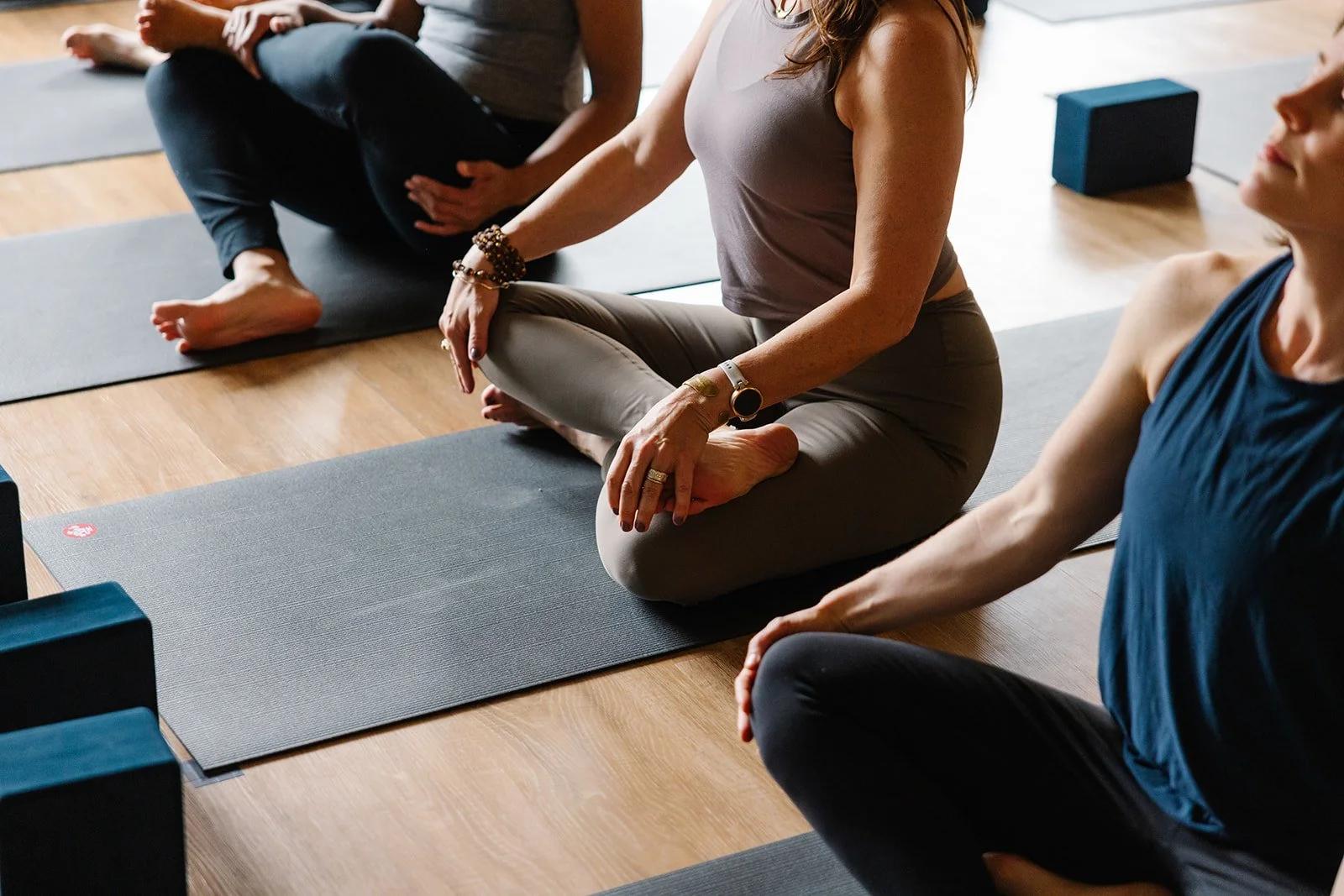
Ujjayi (pronounced oo-jai) is a Sanskrit word meaning "to be victorious," and is often translated simply as the breath of victory, victorious breath, or warrior breath. Ujjayi pranayama is a foundational type of breathing that can be practiced by students of all levels as part of a seated or asana practice.
Ujjayi is practiced by gently constricting the back of the throat while breathing in and out slowly and deeply through the nose with the mouth closed. This creates a soft, rhythmic sound often likened to the ocean. The breath should be long, smooth, and full, allowing the air to fill the lungs completely.
The throat constriction in ujjayi naturally slows the breath, which activates the parasympathetic nervous system and induces a state of calm. The subtle vibration created in the larynx also stimulates the vagus nerve, further supporting a relaxed and focused state of body and mind.
Ujjayi breathing may require some effort at first, but with regular practice, it can become natural and effortless. Here are some tips for working with ujjayi breath:
To begin this practice, try using a breathing ratio of 1:1:2 (Inhale, Hold the inhale, exhale).
Try following these steps: Exhale all your air. Then, inhale for 1, 2, 3, 4, 5. Hold at the top of the inhale for 1, 2, 3, 4, 5. Then, exhale for 1, 2, 3, 4, 5, 6, 7, 8, 9, 10. Now, again, inhale deeply for 1, 2, 3, 4, 5…” And so on.
Begin with five cycles of ujjayi breath followed by five natural breaths, then ten cycles of ujjayi breath, followed by ten natural breaths, then ten again. Over time, the muscles of the throat become toned for more control of the breath .
References
Desikachar, T. K. V. (1995). The heart of yoga: Developing a personal practice. Inner Traditions International.
Freeman, R. (2012). The mirror of yoga: Awakening the intelligence of body and mind. Shambhala Publications.
Keach, S. (2003). Yoga handbook: An inspirational reference for teaching and home practice.
Rosen, R. (2002). The yoga of breath: A step-by-step guide to pranayama. Shambhala Publications.
Satchidananda, S. (2012). The yoga sutras of Patanjali (Rev. ed.). Integral Yoga Publications.