
Flow Study: 5 Simple Practices for Integrating the Niyamas into Everyday Life by Kate Van Dis
Yoga Beyond the Poses
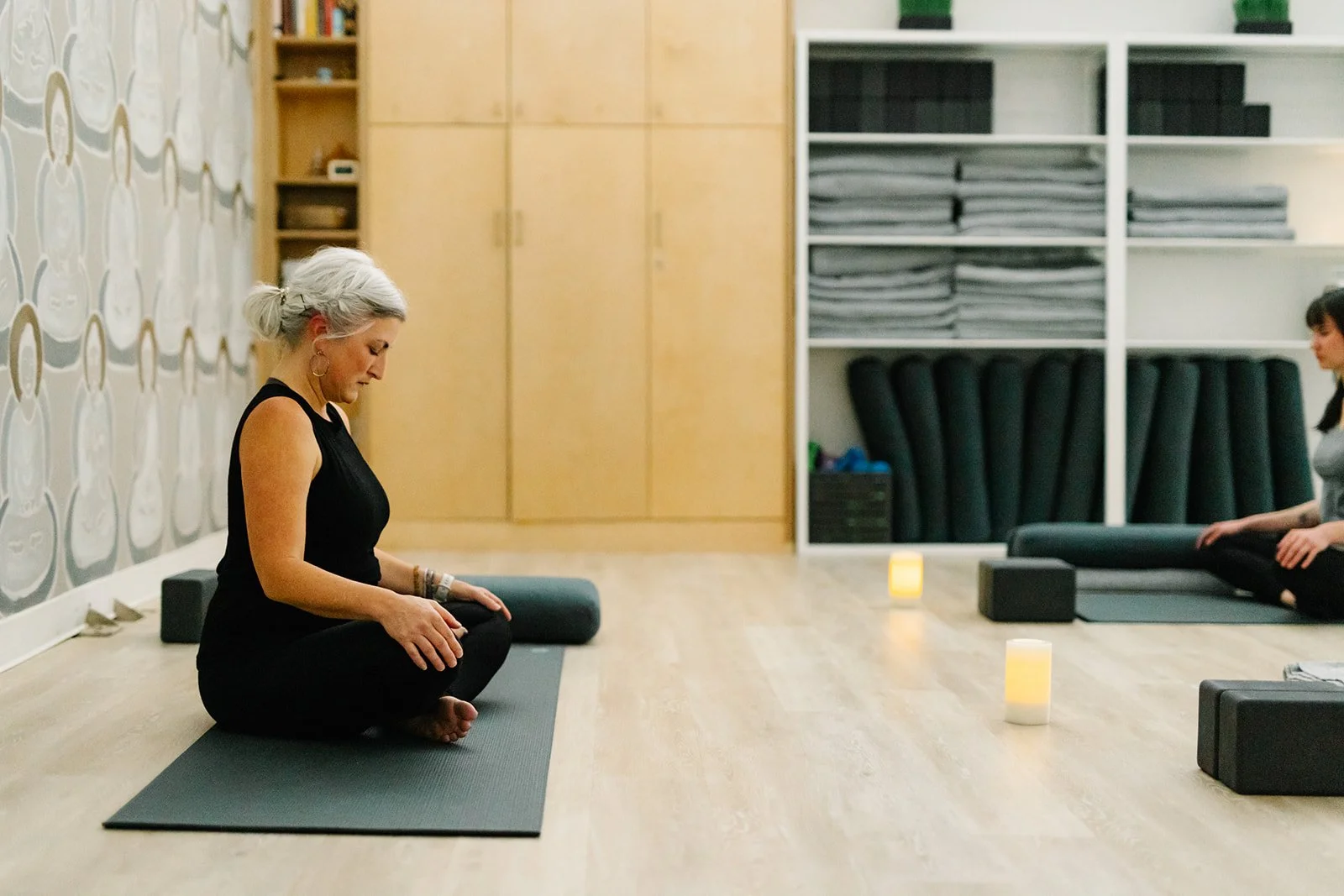
If you’ve been to a yoga class, you may already know that the physical practice of yoga is a profound gift. And it’s the alignment of the body in a particular pose that often leads to an even deeper alignment—one of body, mind, and spirit, an alignment that shows up as a sort of “after-class glow.” This sense of well-being—that bright, open feeling in body and mind—is the door that leads many people to explore yoga beyond the poses. This is the third in a series of posts exploring the Eight Limbs of Yoga, as outlined in the Yoga Sutras of Patanjali. First, we introduced the overall concept of Yoga Philosophy, and then we explored the first limb of yoga, the Yamas. Today’s post explores the second limb of yoga, the Niyamas.
What are the Niyamas?
Whereas the Yamas are expressed as ethical restraints—or actions to avoid—the Niyamas are expressed as practices to enact—actions to help guide an ethical, authentically-lived life. Together, these practices help to create a lifestyle guided by ritual, intention, and clarity. Here is a list of the Niyamas, with a simple definition for each:
Saucha = Cleanliness. In its simplest sense, this Niyama invites us to cleanse and purify the body and the home, but Saucha is also an invitation to purify our actions, thoughts, and hearts.
Santosha = Contentment. Santosha can also be interpreted as gratitude, or an invitation to embrace our lives just as they are, right now.
Tapas = Discipline. This Niyama invites us to stay “in the fire,” whether the fire is a challenging pose or a difficult conversation. Tapas is deep dedication to a practice, even when the going gets tough.
Svadhyaya = Self Study. In a nutshell, Svadhyaya is self-reflection. By becoming more self-aware, we gain an understanding useful for changing patterns of thought and behavior that no longer serve us.
Ishvara Pranidhana = Devotion. This Niyama invites us to trust a power greater than ourselves, whether we define that as consciousness, love, or God.
Simple Rituals for Working with the Niyamas
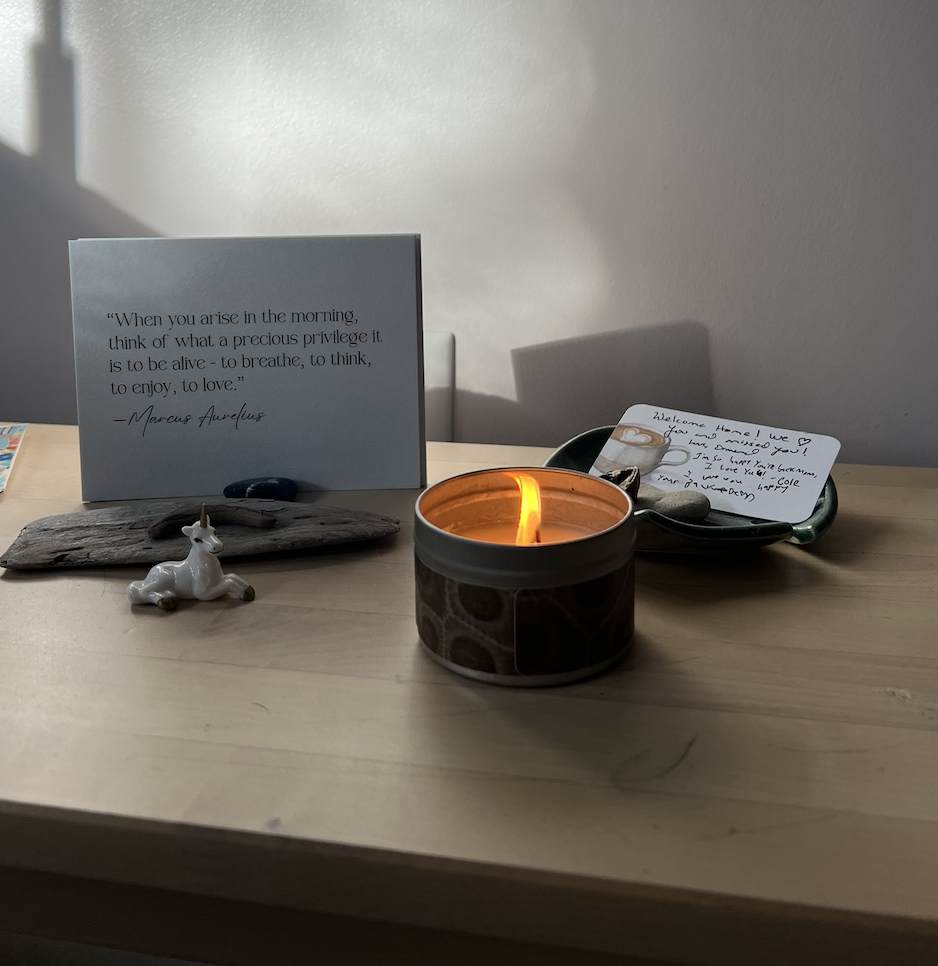
Photo from the author’s personal altar.
Each of these rituals offers a way to work with the Niyamas in your own life. They can be done daily, weekly, monthly, or just every once in a while. Start by picking a single Niyama—one that really resonates with you—and adopting the associated ritual for a week or two to see how it feels.
A Saucha Ritual: Designate a space in your house as an altar or a personal reflection space—maybe this is the space where you meditate or practice yoga. Then, make it a daily or weekly ritual to clean and refresh this space, adding mementos from your life as you do so, such as photos of ancestors or family members, favorite books or quotes, and items from nature. As you clean and refresh your altar, think of it as a reflection of your inner landscape.
Santosha is a Practice of Gratitude: In some summer camps and elementary school classrooms, counselors ask campers or students about their “rose” of the day, which is a simple invitation to reflect on one moment of their day that they’re grateful for. This is a great conversation starter for family dinners and a good prompt for writing in your journal at the end of the day.
The Tapas To-Do List: Do you sometimes feel overwhelmed by your to-do list? Try creating a to-do list that’s inspired by the discipline of Tapas, and put the hardest tasks at the top. Mark Twain once said, “If it's your job to eat a live frog, it's best to do it first thing in the morning. And If it's your job to eat two frogs, it's best to eat the biggest one first.” This wisdom is sometimes echoed in the phrase “eat the frog,” which simply means to stop procrastinating by tackling the tough stuff first. Put that thing you’ve been avoiding at the top of your list, and then notice the mental space that’s cleared up when you can cross it off your list.
Svadhyaya Journaling: At the end of each week, set aside just ten to twenty minutes to write in your journal. During that time, reflect on the past week (or month, if a monthly practice feels more doable). What did you learn? How are you growing? What do you want to repeat? What do you want to learn from and let go of? Susannah Conway’s Unravel Your Year workbook is a great starting point for this practice.
A Little Savasana Goes a Long Way: To practice Ishvara Pranidhana, consider making Savasana a more regular part of your practice, either at home or in the studio. If you’re in Savasana at the end of an in-studio class, resist the temptation to let the thoughts wander. At home, set a timer for five minutes and embrace this pose of deep rest. Savasana, which translates as “Corpse Pose,” is a powerful reminder of the ultimate letting go—death—and is a powerful way to practice letting go of thoughts, worries, and ego as we surrender to a higher purpose or energy.